How Does an Evaporative Air Cooler Work?
News Details
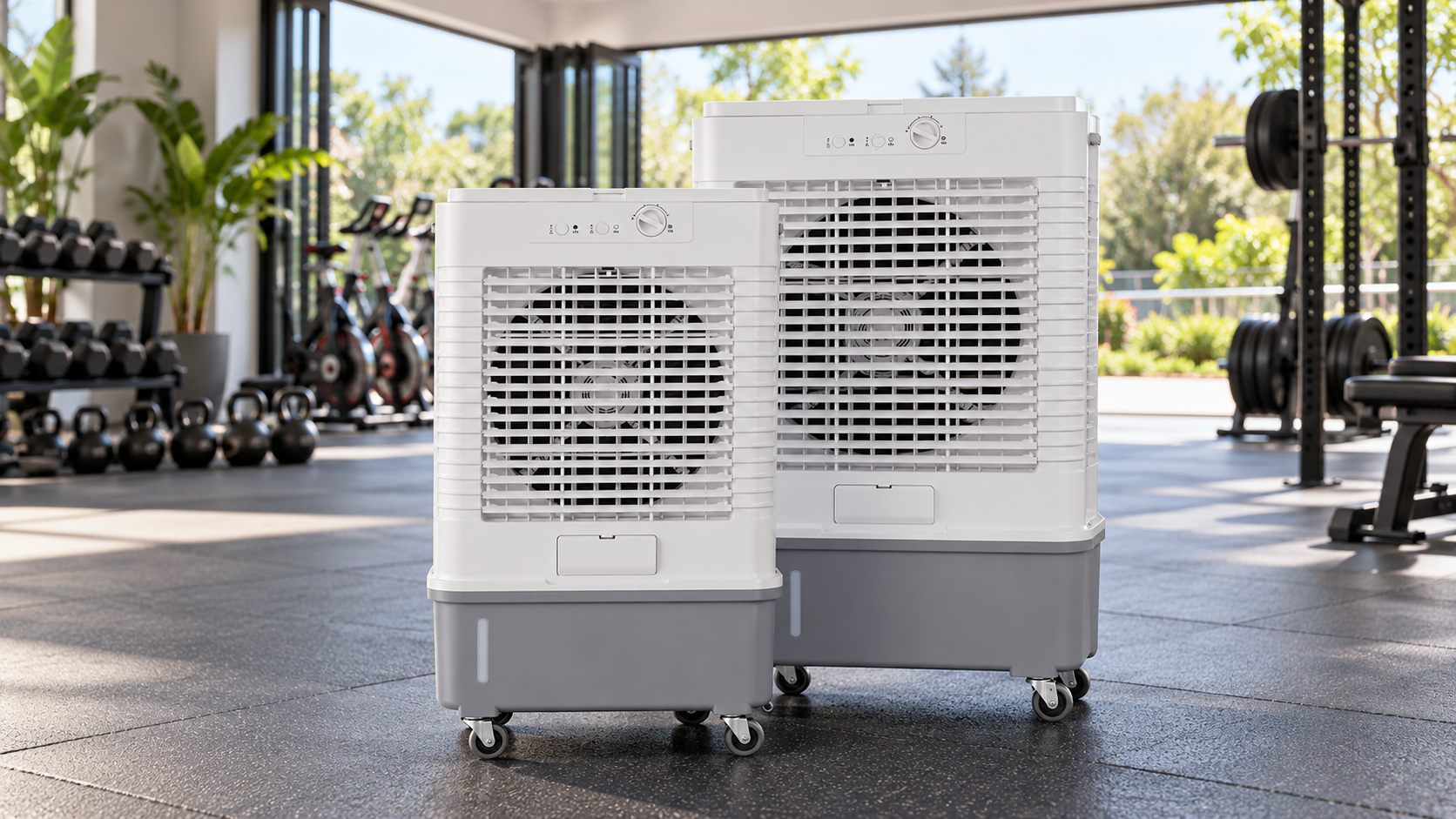
An evaporative air cooler works by pulling warm air through wet cooling pads. As some of the water evaporates, it absorbs heat from the air. A fan then sends the cooler air towards the people or space that needs cooling.
The process uses water, airflow and electricity. Unlike a standard air conditioner, a direct evaporative cooler does not use a refrigerant compressor to provide cooling.
However, results depend on the weather and how the unit is used. This guide explains the process, the main parts and how to choose a suitable LEBON cooler.
How an Evaporative Air Cooler Uses Water to Cool Air
Think about how your skin feels cool when water dries on it. Evaporation needs energy, which it takes as heat from its surroundings.
An evaporative air cooler uses the same principle. It spreads water over cooling pads and moves air through them. As water changes into vapour, the passing air loses heat.
At the same time, the air gains moisture. Therefore, this method works best in hot, dry conditions. When the incoming air is already humid, the cooling effect becomes smaller.
You may also see the term air evaporative cooler used for this equipment. Both names describe cooling based on water evaporation.
The Evaporative Air Cooler Process in Five Steps
1. Water fills the tank
The tank stores the water needed for cooling. Users refill it manually or use a connected supply where the model supports one.
2. A pump sends water to the pads
The pump moves water from the tank into a distribution system. This system spreads water across the cooling pads.
3. The fan draws in warm air
Air enters through the intake openings and passes through the wet pads. Clear intake space helps maintain airflow.
4. Evaporation removes heat
Some water evaporates as air passes through the pads. This lowers the air temperature while increasing its moisture content.
5. Cooled air moves into the space
The fan pushes cooled air out of the unit. Meanwhile, indoor air needs a route out so that fresh air can continue moving through the area.
Water that does not evaporate usually flows back into the tank for reuse. However, the tank level still falls during operation because evaporation consumes water.
What Are the Main Parts of an Air Cooler Fan?
Each part has a role in cooling performance and daily use.
| Part | Main job | What buyers should check |
|---|---|---|
| Cooling pads | Provide a wet surface for evaporation | Condition, cleaning access and replacement availability |
| Water pump | Moves water to the pads | Reliable flow and service access |
| Water distribution system | Spreads water across the pads | Even wetting |
| Fan and motor | Move air through the cooler | Airflow, speed settings, power input and noise |
| Water tank | Stores cooling water | Capacity, refill access and drainage |
| Controls | Adjust operation | Ease of use and available settings |
| Casters | Support movement on mobile models | Floor suitability and safe handling |
A large tank can reduce refill frequency. However, it does not automatically make the outlet air colder. Cooling also depends on humidity, pad performance and airflow.
Why Does an Evaporative Air Cooler Need Ventilation?
A direct evaporative cooler adds moisture to the air. In a sealed room, that moisture can build up. As a result, evaporation becomes less effective, and the room may feel damp.
For better results, the unit needs access to fresh air and a suitable exit path for the air it supplies. Depending on the space, this may involve open doors, windows or a designed exhaust system.
For example, a workshop may have suitable airflow through its open entrances. A closed bedroom, by contrast, needs a planned ventilation path.
Placement matters too. Keep the intake away from walls, stored goods and other objects that block airflow. Then, direct the outlet towards the occupied area.
How Much Cooling Can an Evaporative Air Cooler Provide?
There is no single temperature drop that applies to every location.
The result depends on:
- Incoming air temperature and humidity.
- Cooling pad design and condition.
- How evenly the pads are wetted.
- Airflow through the unit.
- Heat from sunlight, machinery and other sources.
- Ventilation and room layout.
In dry weather, water can evaporate more easily. In humid weather, the air has less capacity to take up additional moisture, so cooling is more limited.
Also, outlet air temperature and room temperature are different. The air leaving the cooler may be cooler than the surrounding room, but the entire room will not necessarily reach that temperature.
Therefore, assess performance using local summer conditions and your actual cooling goal.
Domestic Evaporative Air Cooler or Air Conditioner?
A Domestic Evaporative Air Cooler can suit a home where the climate is dry and ventilation is available. It can provide cooled airflow near seating areas or other occupied zones.
A standard fan mainly moves air to help people feel cooler. An evaporative cooler also uses wet pads to lower the temperature of the passing air.
An air conditioner uses a different process. It transfers heat outside through a refrigerant system and removes moisture during normal cooling.
As a result, AC is usually more suitable for humid, enclosed rooms that need a steady temperature. Evaporative cooling is more suited to dry, ventilated spaces where flexible airflow is useful.
Choose according to your conditions rather than expecting both systems to deliver the same result.
How LEBON Evaporative Air Coolers Apply This Process
LEBON develops and manufactures evaporative cooling and air circulation products for residential, commercial and industrial use.
Its mobile cooler range includes options for different spaces:
MFC3600 and MFC6000: These domestic and commercial models combine three-sided air intake, integrated water distribution and wheeled construction. The two models offer different water capacities and operating power.
EC3820 and EC4520: These models provide manual controls and four metal casters for use in homes, shops and commercial spaces.
EC5324D: Designed for workshops and commercial premises, this model features a brushless DC motor, three-sided air intake and a 75-litre water tank.
MFC12000D and MFC18000D: These larger mobile units use brushless DC motors, seven speed settings and large onboard reservoirs for commercial and industrial applications.
Model selection should account for humidity, ceiling height, heat sources and the area where people need relief.
Air Cooler Price: What Affects the Cost?
The air cooler price depends on the model and its features. Fan size, motor type, tank capacity, controls and construction can all affect the quotation.
However, purchase cost is only part of the comparison. Also consider electricity, water, cleaning and replacement pads.
For trade orders, include packaging, freight, duties and local delivery. Custom voltage, plugs, colours or branding may also affect the final offer.
To request a useful quotation, provide your location, intended application, space dimensions and daily running hours. This helps avoid choosing a unit based on price alone.
What Should Buyers Ask Mobile Air Coolers Suppliers?
When comparing mobile air coolers suppliers, ask for clear model specifications and operating guidance.
Confirm airflow, power input, tank capacity, dimensions and maintenance needs. Also, check the test conditions behind any cooling or coverage claims.
When reviewing portable air cooler manufacturers, ask about spare parts, warranty terms, production lead times and certification for the exact model and destination market.
LEBON offers OEM and ODM support, including options for voltage, plug type, colour and branding. Buyers can discuss these requirements alongside product selection.
How Do You Keep an Evaporative Air Cooler Working Well?
Use clean water and follow the model’s cleaning schedule. Keep the tank, pump and cooling pads free from dirt and mineral deposits.
Check that water reaches the pads evenly. Also, keep the air intake clear and maintain a suitable ventilation path.
Before storage, drain and clean the unit as directed in the manual. Regular care helps preserve airflow and cooling performance.
To discuss a suitable cooler, contact LEBON. Share your climate, application and operating needs to explore models and request a quotation.


