Are Portable Air Coolers Any Good?
News Details
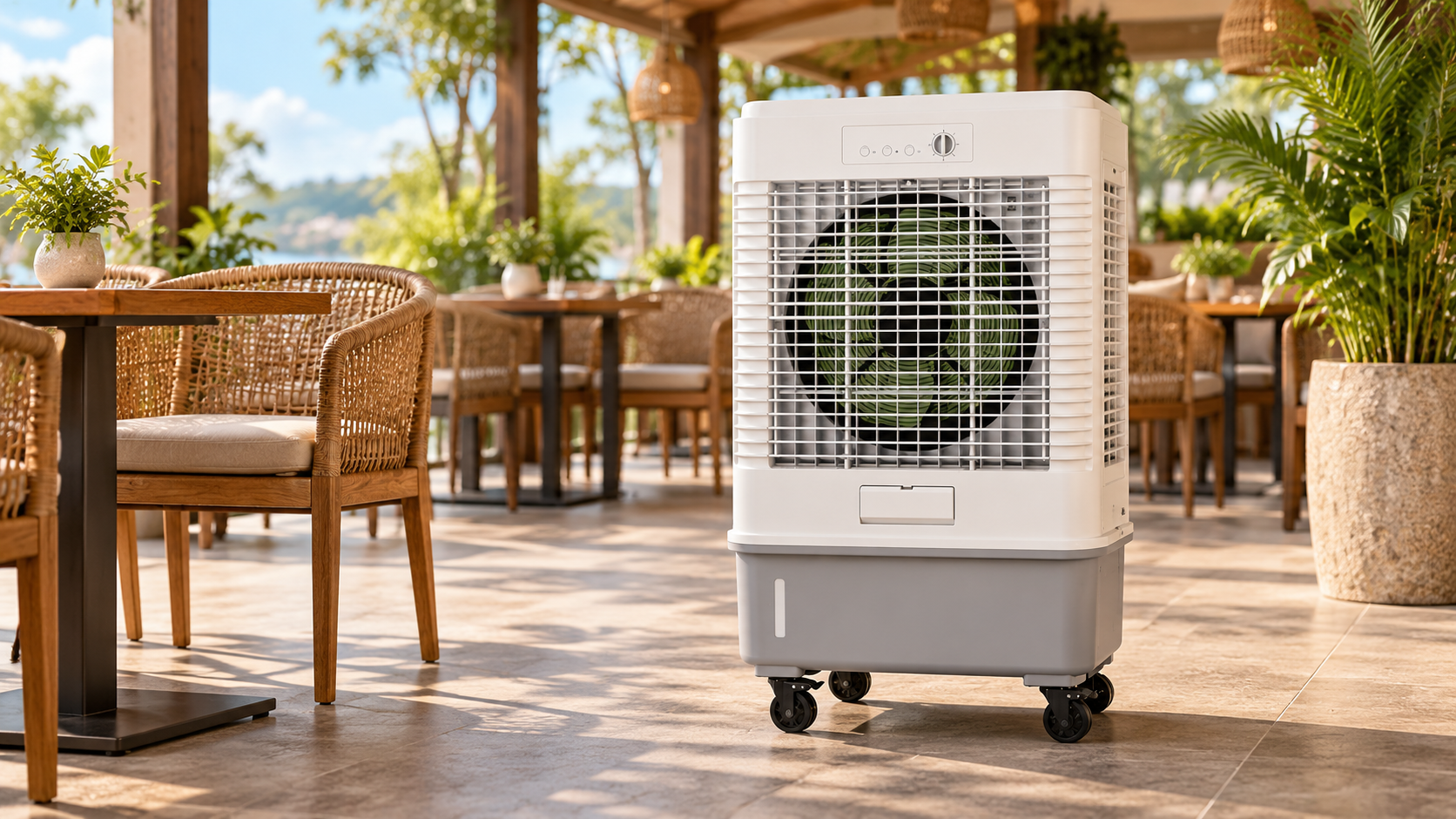
Yes, portable air coolers can provide useful cooling, especially in hot, dry weather and well-ventilated spaces. They are easy to move and can direct cooled airflow where people need it most. However, their performance depends on humidity, airflow and correct placement.
For a home, shop or workshop, a portable air cooler may offer a simple way to improve comfort. Yet it is important to understand what it can deliver before buying.
This guide explains how these units work, where they perform best and how to choose a suitable LEBON model.
How Does a Portable Air Cooler Work?
A portable evaporative air cooler uses a fan, water pump and wet cooling pads. The pump spreads water across the pads. Then, the fan draws warm air through them.
As water evaporates, it absorbs heat from the passing air. The unit then blows this cooler air into the space.
Unlike a standard fan, an evaporative air cooler can lower the temperature of the air passing through it. However, it also adds moisture. This is why dry air offers better cooling conditions than humid air.
Some buyers use the term air evaporative cooler for the same type of equipment. It should not be confused with a portable air conditioner, which uses a refrigerant system and needs a way to discharge heat outside.
Where Do Mobile Air Coolers Work Best?
Mobile air coolers are most useful where dry air, good ventilation and a clear airflow path are available.
Homes and garages: A suitable unit can provide cooled airflow near a seating area or home workbench. However, fresh air must enter, and moist air needs a route out.
Shops and service areas: Cooling needs may change throughout the day. A wheeled unit can be repositioned near a counter or another occupied area.
Workshops and warehouses: Large spaces often have high ceilings and doors that open frequently. In suitable weather, mobile units can help cool specific work zones.
Sheltered, semi-open areas: Evaporative cooling may improve comfort around seating or work areas in dry weather. Always check that the selected model is approved for the intended location.
For example, cooling a packing station may be more practical than trying to hold an entire warehouse at one fixed temperature. Therefore, start with the area people actually use.
What Are the Benefits of a Portable Air Cooler?
Flexible placement
Wheels make it easier to move cooling between suitable locations. This is helpful when workstations or seating layouts change. Follow the manual when moving a unit, especially with water in the tank.
Simple setup
Many mobile models need only a suitable power supply, water and ventilation. They do not require the refrigerant pipework used by split air conditioners.
Potentially lower running costs
A direct evaporative cooler mainly powers a fan and water pump. In suitable conditions, this can offer lower electricity use than compressor-based cooling. However, actual costs depend on the equipment, weather and operating hours.
Cooling close to the user
An air cooler fan can direct airflow towards an occupied zone. As a result, it may suit spaces where cooling every corner is unnecessary.
What Are the Limits of an Evaporative Air Cooler?
Humidity is the main limit. When the air already contains a lot of moisture, less water can evaporate. Consequently, the cooling effect becomes smaller.
Ventilation also matters. In a sealed room, moisture can build up and reduce performance. An evaporative cooler needs fresh air and a suitable exit path for the air it supplies.
Finally, these units need water and regular care. Tanks, pumps and cooling pads must stay clean, while mineral deposits may need removal.
A portable air cooler is therefore less suitable when you need:
- A fixed indoor temperature through changing weather.
- Moisture removal in a humid room.
- Closely controlled conditions for sensitive goods.
- Cooling in a room that must remain sealed.
In these cases, air conditioning may be a better fit.
Air Cooler Fan vs Portable AC: Which Should You Choose?
| Your main need | Option to consider |
|---|---|
| Cooled airflow in dry weather | Portable evaporative air cooler |
| Flexible cooling around ventilated work areas | Mobile air cooler |
| Moisture removal | Air conditioner |
| Steady temperature in a closed room | Air conditioner |
| Air movement without water refills | Standard fan |
Think about your climate during the hottest working hours. A dry morning and a humid afternoon can produce different results from the same evaporative cooler.
Also, separate outlet air temperature from room temperature. Cooler air leaving the unit does not mean the whole room will reach that temperature. Heat from sunlight, machinery and open doors affects the result.
Air Cooler Price: How Do You Judge Value?
A low air cooler price is appealing, but the cheapest unit may not suit your space. Compare the full cost and useful features before deciding.
First, check airflow and the intended application. A small household unit may not deliver enough air across a busy workshop.
Next, compare power input at the settings you expect to use. For a basic electricity estimate:
Daily electricity cost = power in kilowatts × operating hours × electricity rate
Then, add water, cleaning and replacement pad costs. For business orders, include freight, duties and local delivery.
Tank size matters too. A larger tank may extend the time between refills, but it does not automatically mean colder air.
Finally, consider access to spare parts and service. Easy maintenance can provide better long-term value than a small saving on the initial price.
Which LEBON Portable Air Cooler Suits Your Space?
LEBON offers portable evaporative air coolers for domestic, commercial and industrial use. Its range includes compact mobile units and larger models for working areas.
| LEBON models | Intended applications | Main features |
|---|---|---|
| MFC3600 and MFC6000 | Domestic and commercial spaces | Three-sided air intake, integrated water distribution and wheeled construction |
| EC3820 and EC4520 | Homes, shops and commercial areas | Manual controls, three-sided intake and four metal casters |
| EC5324D | Workshops and commercial premises | Brushless DC motor, 75-litre tank and heavy-duty casters |
| MFC12000D and MFC18000D | Factories, warehouses and workshops | Large fan diameters, brushless DC motors and seven speed settings |
The best choice depends on more than floor area. Ceiling height, local humidity, heat sources and the distance to users also affect model selection.
For distributors and project buyers, LEBON also offers OEM and ODM support. Voltage, plug type, colour and branding can be discussed for the target market.
How Can You Get Better Cooling from Mobile Air Coolers?
Start by placing the unit where it can draw fresh air. Keep the intake clear of walls, boxes and other objects.
Then, provide an outlet for warm, moist air. Follow the model’s ventilation guidance rather than running it in a closed room.
Use clean water and maintain the correct tank level. Also, inspect the cooling pads and clean the water system as directed in the manual.
Adjust fan speed to suit the task. Higher airflow may help reach a work area, while a lower setting may be more comfortable nearby.
Lastly, check performance during your normal operating hours. This gives a more useful picture than testing briefly under unusually dry conditions.
Are Portable Air Coolers Worth Buying?
Portable air coolers are worth considering when you need movable cooling in a dry, ventilated space. They can suit homes, shops and work zones where simple setup and flexible placement matter.
However, choose air conditioning when humidity control and a steady room temperature are essential.
To find a suitable option, explore LEBON’s cooling range. Share your location, space dimensions, ventilation and daily operating hours to discuss a model and request an air cooler price quotation.


