What Is a Downside of Evaporative Cooling?
News Details
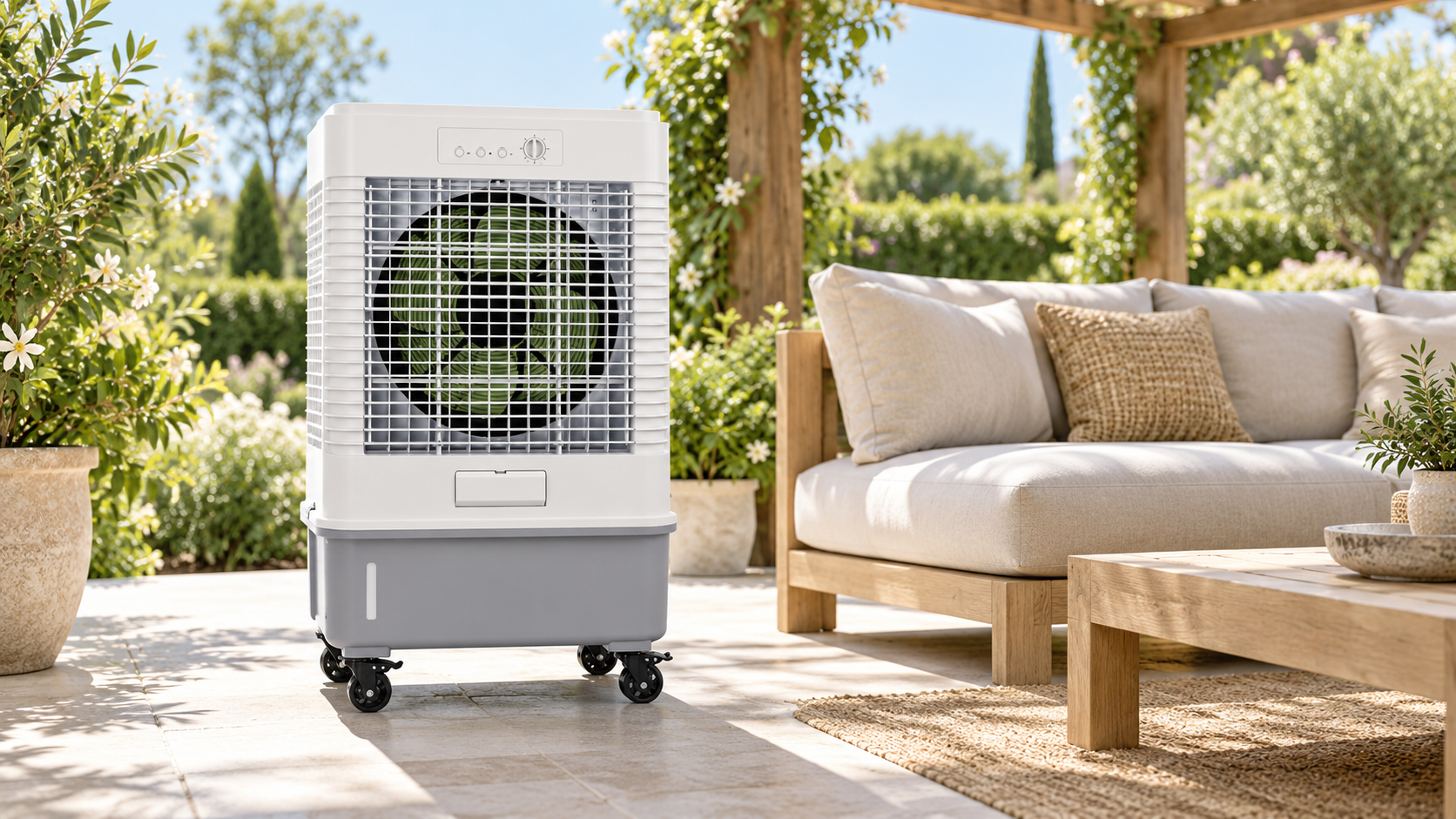
The main downside of evaporative cooling is that it becomes less effective as humidity rises. A direct evaporative air cooler uses water evaporation to remove heat from passing air. However, when the air already holds a lot of moisture, less water can evaporate.
These coolers also add moisture, need ventilation and require regular cleaning. Therefore, they work best when the climate and space suit the cooling method.
Understanding these limits helps you choose the right equipment. This guide explains the main drawbacks, how to manage them and where LEBON air coolers can fit.
Why Does an Evaporative Air Cooler Struggle in Humid Weather?
An evaporative air cooler draws warm air through wet cooling pads. As water evaporates, it absorbs heat and lowers the temperature of the passing air.
Dry air allows more evaporation. Humid air allows less. As a result, the same unit can deliver different cooling results on different days.
For example, a cooler may provide useful relief on a dry afternoon but offer a smaller temperature drop during damp weather. Increasing fan speed can improve air movement, but it cannot remove this limit.
This makes local summer humidity an important buying factor. Check conditions during the hours when you need cooling most, rather than relying only on a yearly average.
Does an Air Evaporative Cooler Make a Room Damp?
A direct air evaporative cooler adds moisture as part of its normal operation. In a dry, well-ventilated area, this may be acceptable. In a closed room, however, moisture can build up.
As humidity rises, the room may feel less comfortable. At the same time, the cooler has less scope to lower the air temperature.
To manage this, provide fresh air and a clear route for moist air to leave. Depending on the building, this may involve open windows, doors or a designed exhaust system.
If the room must stay sealed or needs moisture removal, air conditioning is usually a better fit.
Why Does Evaporative Cooling Need Ventilation?
Unlike conventional room air conditioning, direct evaporative cooling needs ongoing air exchange.
Simply placing a cooler in a closed room and shutting every window can reduce its performance. Instead, incoming cooled air should move through the occupied area and then leave the building.
Good placement helps:
- Keep the intake clear of walls and stored goods.
- Allow the cooler to draw fresh air.
- Provide an exit path for warm, moist air.
- Direct the outlet towards the people who need cooling.
However, an open door alone does not guarantee enough ventilation. Larger commercial spaces may need an airflow assessment, especially where machinery adds heat.
Water Use Is Another Downside of Evaporative Cooling
An evaporative cooler consumes water while it operates. Although unused water may return to the tank, the portion that evaporates must be replaced.
Water use varies with weather, airflow, equipment design and running time. Therefore, a fixed refill interval should not be assumed for every site.
A larger tank can reduce how often users refill the unit. However, it also makes a full cooler heavier and does not guarantee colder outlet air.
Before buying, consider water access, refill work and local water costs. Where water is limited or expensive, these factors may affect whether evaporative cooling is practical.
An Air Cooler Fan Needs Regular Cleaning
An air cooler fan uses a water system as well as moving parts. Consequently, it needs more care than a basic dry fan.
Dust can collect on the intake and cooling pads. Meanwhile, minerals in the water can leave deposits on wet surfaces. Over time, these deposits may restrict airflow or affect water distribution.
Routine care should follow the model’s manual and include:
- Cleaning the tank and accessible water passages.
- Checking that the pads are wetted evenly.
- Removing deposits using approved methods.
- Inspecting the pump and intake.
- Replacing worn cooling pads when needed.
Also, drain and clean the unit before extended storage. Easy access to the tank, pads and pump can make this work simpler.
Can an Evaporative Air Cooler Hold a Fixed Temperature?
An evaporative air cooler cannot be expected to maintain the same room temperature through all weather conditions.
Its cooling ability depends on the temperature and humidity of the incoming air. Sunlight, machinery, occupancy and building layout also affect the result.
Moreover, outlet air temperature is different from room temperature. Cooler air leaving the unit does not mean the whole space will reach that temperature.
For a workshop that needs airflow around a packing station, this may be acceptable. For a room that needs close temperature and humidity control, it may not be.
Buyers researching air evaporative cooler cooling should therefore look beyond a single advertised temperature drop. Ask what test conditions produced the result and whether those conditions match the intended location.
Air Cooler Price: What Costs Can Buyers Overlook?
The initial air cooler price is only part of the budget. Water, electricity, cleaning and replacement parts also contribute to ownership costs.
For business buyers, freight, duties and local delivery matter too. In addition, a unit that is too small may provide poor value even if its purchase price is low.
| Cost or requirement | What to check |
|---|---|
| Electricity | Rated input power and expected operating hours |
| Water | Consumption, supply access and refill needs |
| Cleaning | Staff time and access to wet components |
| Replacement parts | Cooling pad and pump availability |
| Placement | Floor space, ventilation and airflow path |
| Trade orders | Packing, shipping and destination requirements |
A useful comparison starts with equipment that suits the application. Then, compare the full cost of operating it.
Choosing a Domestic Evaporative Air Cooler
A Domestic Evaporative Air Cooler can suit a dry, ventilated home. However, household buyers should also consider noise, floor space and daily handling.
Check the unit’s dimensions and sound data, where available. A high airflow setting may suit a garage but feel too strong or noisy beside a sofa.
Also, think about how you will refill, drain and clean it. Casters help with placement, but thresholds, carpets and stairs can limit movement.
Finally, check local humidity. A compact design and large tank cannot overcome unsuitable weather conditions.
How LEBON Helps Buyers Match Coolers to Their Space
LEBON manufactures portable evaporative air coolers for residential, commercial and industrial use.
Its range includes the MFC3600 and MFC6000 for domestic and commercial settings, as well as the EC3820 and EC4520 with manual controls and wheeled construction.
For larger working areas, the EC5324D features a brushless DC motor and a 75-litre water tank. The MFC12000D and MFC18000D offer large fan diameters, brushless DC motors and seven speed settings.
These choices help buyers match airflow, tank capacity and controls to their needs. However, correct sizing and ventilation remain essential.
When comparing mobile air coolers suppliers, provide your location, room dimensions, ceiling height and heat sources. When assessing portable air cooler manufacturers, also ask about spare parts, maintenance guidance and certification for the exact model.
LEBON offers OEM and ODM support, including options for voltage, plugs, colour and branding.
Is Evaporative Cooling Still Worth Considering?
Yes, when the conditions suit it. Evaporative cooling can provide useful, flexible relief in hot, dry and well-ventilated spaces.
Its main limits are humidity, added moisture, water use and maintenance. Recognising these limits helps prevent poor results and unnecessary spending.
Explore LEBON’s cooling range and share your climate, application and operating hours. This makes it easier to discuss a suitable model and request an air cooler price quotation.


