Can an Evaporative Cooler Cool an Entire House?
News Details
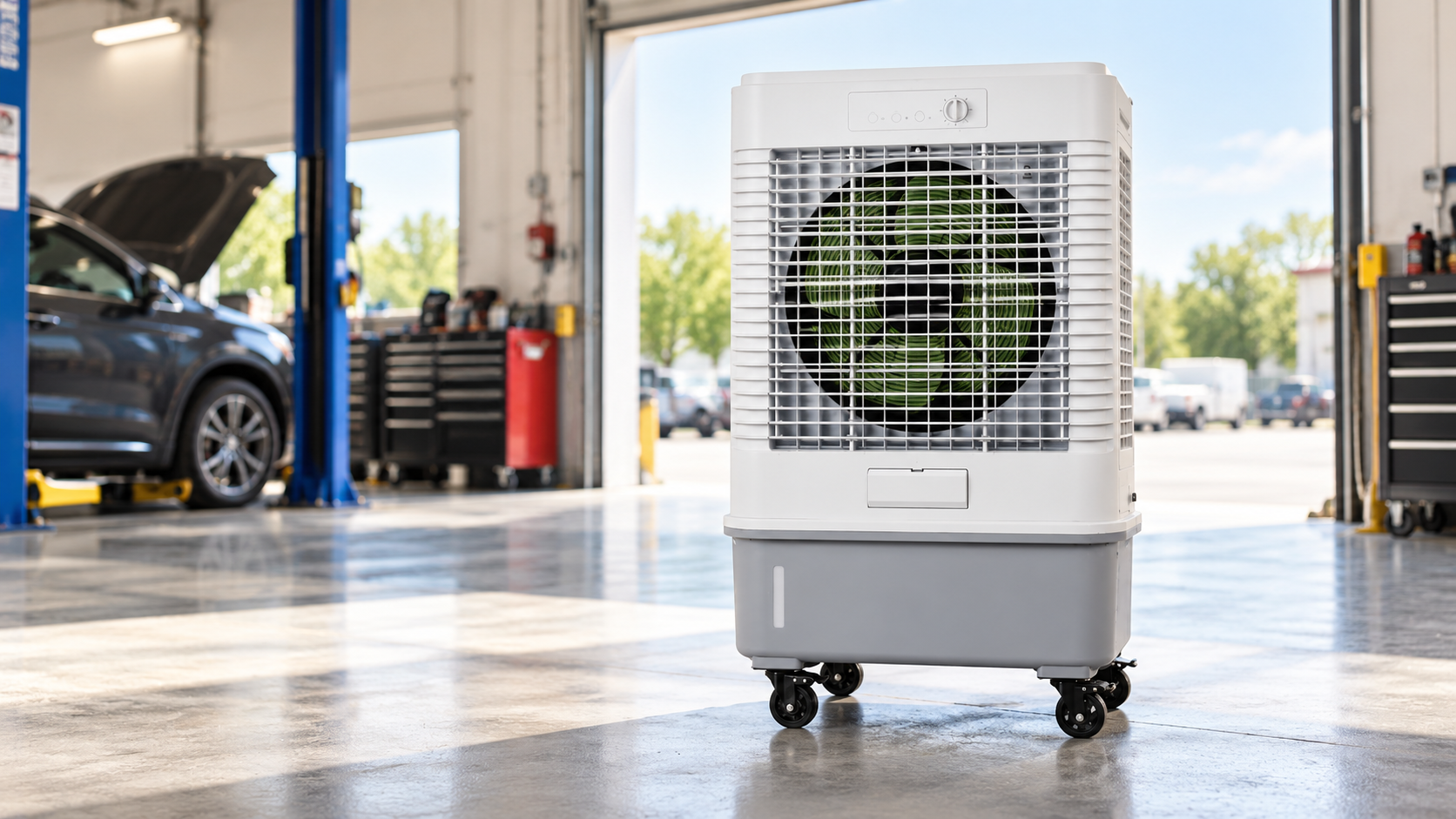
Yes, a properly sized whole-house evaporative cooling system can cool an entire home in a suitable dry climate. However, a single portable unit will usually serve an occupied area or connected open space rather than several separate rooms.
The result depends on humidity, home size, layout and airflow. Therefore, choosing between a portable cooler and a whole-house system starts with understanding how each delivers air.
This guide explains what to expect and where LEBON domestic evaporative air coolers can fit.
What Is Evaporative Cooling in a House?
Evaporative cooling uses water evaporation to lower air temperature. In a direct evaporative cooler, a pump wets cooling pads while a fan draws warm air through them.
As some water evaporates, it absorbs heat from the passing air. The unit then supplies cooler air with added moisture.
This process works best in dry weather. As humidity rises, the cooling effect becomes smaller. Unlike conventional air conditioning, direct evaporative cooling does not remove moisture.
For home use, fresh air must enter and moist air must have a route out. Running the cooler in a sealed room can cause humidity to build up and reduce performance.
Whole-House System vs Indoor Evaporative Cooler
A whole-house system and a portable indoor evaporative cooler use the same basic principle. However, their air supply and distribution differ.
| Feature | Whole-house evaporative system | Portable indoor evaporative cooler |
|---|---|---|
| Main purpose | Serve the home through a planned airflow system | Cool an occupied area or connected space |
| Installation | Fixed installation, often with ducts | Usually placed on the floor |
| Air distribution | Ducts or a designed central supply | Air blows directly from the unit |
| Water supply | Usually connected to plumbing | Often uses a refillable tank |
| Placement | Fixed location | Can move between suitable locations |
| Main limit | Climate and system design | Climate, airflow reach and room layout |
A portable cooler should not be assumed to replace a whole-house system. Even a large fan cannot guarantee that cooled air will reach distant bedrooms through narrow halls and closed doors.
When Can an Evaporative Cooler Cool an Entire House?
Whole-house cooling becomes practical when several conditions work together.
The climate is dry
Dry incoming air allows more water to evaporate. However, a region with dry weather for part of the year may still have humid periods when performance falls.
The system supplies enough air
The required airflow depends on home volume, local conditions and the cooling goal. Floor area alone does not provide enough information.
Air reaches the rooms
A compact, open layout may suit a central supply. A home with separate bedrooms, long halls or multiple floors may need ducts and carefully placed outlets.
Air can leave the building
Supplied air needs an exit path. Open windows or designed relief vents help air move through the intended rooms.
The heat load is manageable
Roof insulation, shading, window size and sun exposure affect cooling demand. Reducing unwanted heat can improve comfort and make the cooling system’s job easier.
Why One Portable Cooler May Not Cool Every Room
A portable unit sends air from one outlet. The strongest cooling effect is generally along that airflow path.
Walls, furniture and corners can reduce air movement. Meanwhile, closed doors prevent cooled air from passing freely between rooms.
For example, a cooler placed in a living room may improve comfort there and in an adjoining open dining area. However, a bedroom at the end of a hallway may receive little cooled air.
Placing the unit centrally does not automatically solve this problem. Air tends to follow the easiest available path, which may lead straight to a nearby open window.
Therefore, plan where air enters, where people need cooling and where air leaves.
How Much Airflow Does a House Need?
Airflow is commonly listed in cubic metres per hour or cubic feet per minute. For an initial discussion, calculate the home’s internal volume:
Home volume = floor area × average ceiling height
For example, a 100-square-metre home with 2.5-metre ceilings has an internal volume of about 250 cubic metres.
However, this figure does not identify the correct cooler by itself. A supplier or system designer must also consider local summer conditions, room layout and the required air exchange.
For ducted systems, bends, duct length and outlets affect delivered airflow. Consequently, the fan must be assessed under the actual system resistance rather than by a free-air rating alone.
When comparing air evaporative cooler cooling claims, ask for the conditions behind any coverage figure.
Where Does a Domestic Evaporative Air Cooler Fit?
A Domestic Evaporative Air Cooler can be useful when you mainly need relief in one occupied area.
Examples include:
- A living room with suitable ventilation.
- An open living and dining space.
- A home office with a clear airflow path.
- A garage or hobby workspace.
This approach may suit households that use different areas at different times. Instead of cooling every room at once, users can position a mobile unit where it is needed.
However, check noise, floor space, refill access and safe movement before choosing. Also, follow the model’s instructions when moving a unit containing water.
LEBON Indoor Evaporative Cooler Options
LEBON manufactures mobile evaporative coolers for domestic, commercial and industrial applications.
Its MFC3600 and MFC6000 models combine three-sided air intake, integrated water distribution and wheeled construction. The two models offer different water reservoir capacities and operating power for different needs.
The EC3820 and EC4520 also serve domestic and commercial spaces. They feature manual controls and four metal casters for flexible placement.
These portable models are options for cooling suitable occupied areas. They should not be treated as a complete ducted whole-house system without a separate assessment of airflow and distribution.
Before selecting a model, share the room dimensions, local humidity, ventilation and expected operating hours with LEBON.
How Can You Improve Indoor Evaporative Cooler Performance?
First, give the cooler access to fresh air. Avoid repeatedly drawing in increasingly moist air from a closed room.
Next, provide an exit route beyond the area you want to cool. This helps the supplied air move through the occupied space.
Keep the intake and outlet clear. Curtains, furniture and stored items can restrict airflow.
Also, reduce heat entering through sunny windows where practical. External shading or suitable blinds can help.
Finally, maintain the tank, pump and cooling pads according to the manual. Dirt, scale and uneven pad wetting can reduce performance.
What Should You Ask Suppliers and Manufacturers?
When comparing mobile air coolers suppliers, explain whether you need cooling for one room, an open living area or the entire house. These are different requirements.
Ask for:
- Airflow and rated power input.
- Recommended operating conditions.
- Noise data and test details, where available.
- Water capacity and refill guidance.
- Cleaning instructions and spare parts.
- Evidence supporting coverage claims.
When reviewing portable air cooler manufacturers, also confirm the voltage, plug type and certification for the exact model and destination market.
LEBON offers OEM and ODM support, including options for voltage, plugs, colour and branding.
Should You Choose Portable or Whole-House Cooling?
Choose a portable indoor evaporative cooler when you need flexible cooling in a dry, ventilated living area. Consider a properly designed whole-house system when several rooms need cooling at the same time.
If your climate is humid or you need close temperature and moisture control, air conditioning may be more suitable.
To discuss portable cooling for your home or product range, contact LEBON. Share your climate, layout and cooling goals to explore a suitable option.


